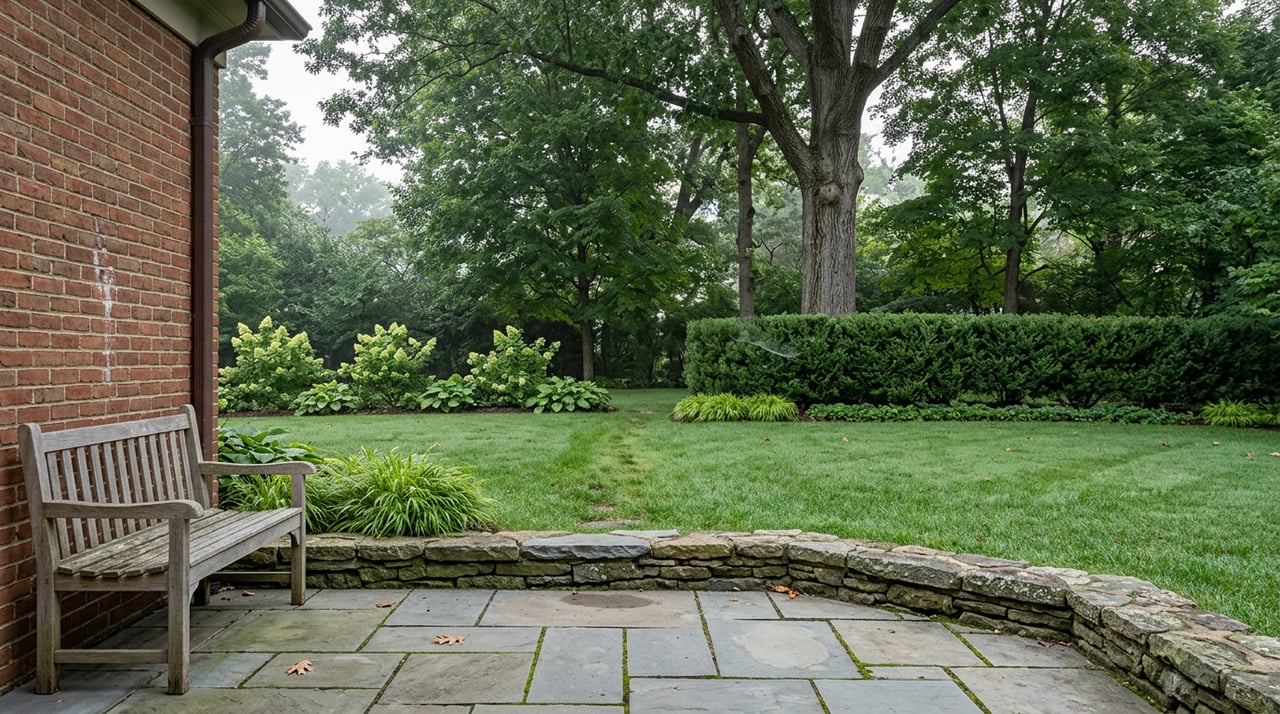
Millcroft Golf Course Development in Burlington Explained
A real estate agent walking a buyer through a home near the fairway has a reliable line ready: this lot backs onto the golf course, so the view is protected. It sounds like a fact about the land. In Millcroft right now, it is closer to a fact about the calendar.
In May 2025, crews working for the developer of Millcroft Golf Club cleared 425 trees from the course in a single day. The land they cleared was, at the time, zoned Open Space under Burlington's own zoning by-law. The trees came down anyway, because a provincial tribunal had already ruled that the zoning could change.
That gap between what a zoning map says and what actually gets built is not a technicality. For anyone comparing homes in Millcroft, or any western GTA neighbourhood where the pitch includes proximity to a golf course, a ravine, or protected parkland, it is one of the more useful things to understand before writing an offer.
Burlington's zoning by-law lists the Millcroft Golf Club lands at 2155 Country Club Drive as (O1) Open Space. On paper, that designation limits the site to recreational and open-space uses. In practice, a zoning designation is a policy choice made by council, and policy choices made by council can be appealed to the Ontario Land Tribunal, the provincial body that rules on land use disputes across the province.
Burlington council voted unanimously against redeveloping the golf course back in 2022. The developer, Millcroft Greens, appealed that opposition to the OLT. On June 12, 2024, the tribunal sided with the developer, ruling that the proposal for five parcels of the course, labelled Areas A through E, represented good land use planning and was in the public interest. The city's own Official Plan and zoning by-law were amended to match, and the tribunal's final order came down on February 19, 2025.
None of that required the city to agree. It required the tribunal to disagree with the city, which is exactly what happened.
| Date | What happened |
|---|---|
| 2022 | Burlington council unanimously opposes redevelopment of the golf course |
| June 12, 2024 | The Ontario Land Tribunal approves development on Areas A through E, overriding council |
| Aug 2024 | The Minister of Municipal Affairs and Housing denies the city's first request for a zoning order protecting the course, citing conflict with the OLT ruling |
| Feb 19, 2025 | The OLT issues its final order, cementing the amended Official Plan and zoning |
| May 1, 2025 | 425 trees are removed from the site in a single day ahead of construction |
| Spring 2026 | The city files a second, narrower request for a Ministerial Zoning Order covering only the roughly 100 acres not already covered by the OLT ruling |
| July 5, 2026 | Public comment closes on the developer's competing MZO request for the same acreage |
| July 22, 2026 | Public comment closes on the city's request |
A buyer touring a home this summer sees a fairway and a tree line. What they are actually looking at is the tail end of a four-year planning fight, with two competing requests still sitting on a minister's desk.
The OLT's approval covered specific parcels, not the entire course. That distinction mattered less to neighbours than it might on paper. Nicky Marwaha, whose backyard had bordered the golf course for thirteen years, came home in early May 2025 to find the tree line behind her house gone. "It's like you have a paradise that's been ruined," she told CBC News.
The city later opened a by-law investigation into the tree removal and issued a cease-work order tied to unresolved conditions in the developer's servicing agreement. That investigation ran alongside, not instead of, the approved construction. The lesson is not that Millcroft's process was unusually messy. It is that an OLT approval is a green light for construction to begin on the tribunal's schedule, regardless of whether every local objection has been resolved or every neighbour has made peace with it.
The fight has not ended, and this is not the city's first attempt to head it off. Burlington asked the province for a Ministerial Zoning Order covering the golf course once already, and in August 2024 the Minister said no, noting that overriding the tribunal's own decision would conflict with it.
The city tried again in spring 2026, this time asking for an order covering only the roughly 100 acres the 2024 decision did not touch. The developer filed a competing request for the same land. Millcroft Greens is asking for an order that would allow roughly 138 new housing units on that remaining acreage, paired with a commitment to dedicate about 75 of those acres to the city as open space at no cost. The city is asking for the opposite: an order that would lock in the existing Open Space zoning and prevent any further development there. In making its original 2024 case for protecting the land, the city had pointed to its own projected shortfall of roughly 104 hectares of urban green space against Burlington's population growth targets through 2051.
Public comment on the developer's request closed July 5, 2026, and on the city's request July 22, 2026. Both sit before the same Minister on Ontario's Environmental Registry. As of the most recent City of Burlington staff report on the file, the province had not yet ruled on either one. Whichever way the Minister decides will set the precedent for what "open space" actually protects the next time a golf course, a ravine, or a stretch of parkland anywhere in Halton becomes attractive to a builder.
A listing that leans on adjacency to a golf course, a conservation area, or municipal parkland is describing today's view. Before assuming it is tomorrow's view too, the Millcroft story points to a short list of things worth checking:
None of this means the land behind a given home will be developed. It means the certainty a listing implies and the certainty a zoning map can actually deliver are two different things, and the difference is worth ten minutes of research before it becomes ten years of regret.
If you are weighing a purchase near Millcroft's fairways, or trying to understand what this fight could mean for a home you already own nearby, this is exactly the kind of file our team tracks alongside comparable sales and school catchments. Robertson Kadwell can walk through what is zoned, what is pending, and what it is likely to mean for your specific street. Request your complimentary home valuation and we will bring the planning file to the conversation, not just the comps.
Stay up to date on the latest trends in real estate.
Get assistance in determining current property value, crafting a competitive offer, writing and negotiating a contract, and much more. Contact us today.