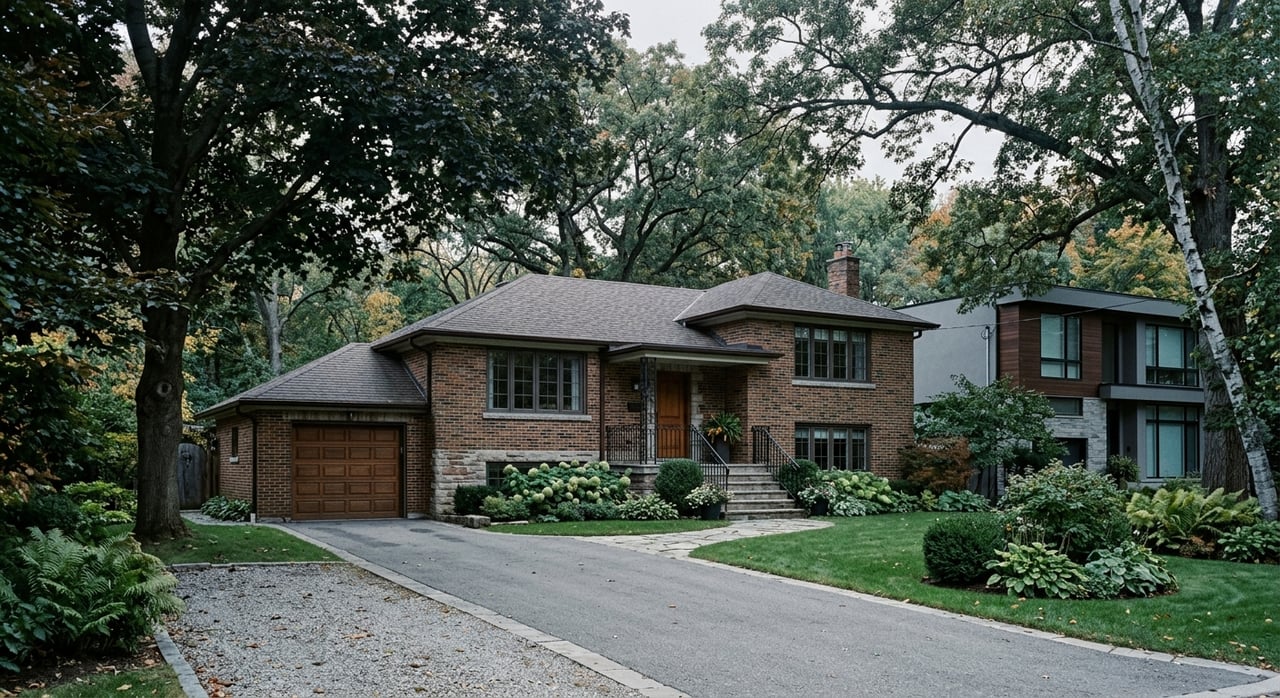
West Oakville Sellers: Renovate, Rebuild Or List As‑Is?
If you own a property in West Oakville, one question can shape your entire selling strategy: should you renovate, rebuild, or list as-is? It is a big decision, especially in an area where mature lots, detached homes, and redevelopment activity all compete for attention. The right answer depends on your home, your lot, and how buyers are likely to value each. Let’s break down how to think through it.
West Oakville sits within Oakville’s south-of-Dundas low-density residential framework, where change is guided by Zoning By-law 2014-014. The Town is also reviewing detached and semi-detached rules across south Oakville, which shows that redevelopment and neighborhood stability are both active priorities.
That balance matters if you are selling. In some cases, buyers are looking for a comfortable detached home they can move into with minimal work. In others, they are focused on the lot and whether a replacement home can fit within local zoning and design rules.
Oakville is still very much a detached-home market. In 2021, single-detached homes made up 58.6% of the town’s housing stock, and the town has described Oakville as affluent and family-oriented, with an estimated 2025 median household income of $154,901.
The resale market also points to opportunity, but not a blank check. In the Oakville-Milton board area, detached home sales rose 2.2% year over year in Q1 2026, with a median detached price of $1,333,400, 5.6 months of inventory, and a median 21 days on market. That suggests a market where well-positioned homes can still attract strong interest, while buyers remain thoughtful about value.
Before you spend a dollar on updates, ask yourself this: are buyers most likely paying for your house, your lot, or both? That one question often points you toward the best path.
If the house is functional, structurally sound, and competitive with some smart improvements, renovation may be the best move. If the lot is the main draw and the house feels outdated or obsolete, rebuild value may be stronger. If the numbers or approvals are murky, listing as-is may protect your time and equity.
Renovation tends to work best when the existing structure still has real value in the eyes of an end-user buyer. In West Oakville, that often means the home has solid bones, the layout can be improved, and the updates are more practical than transformative.
You may be in the renovation lane if your home needs:
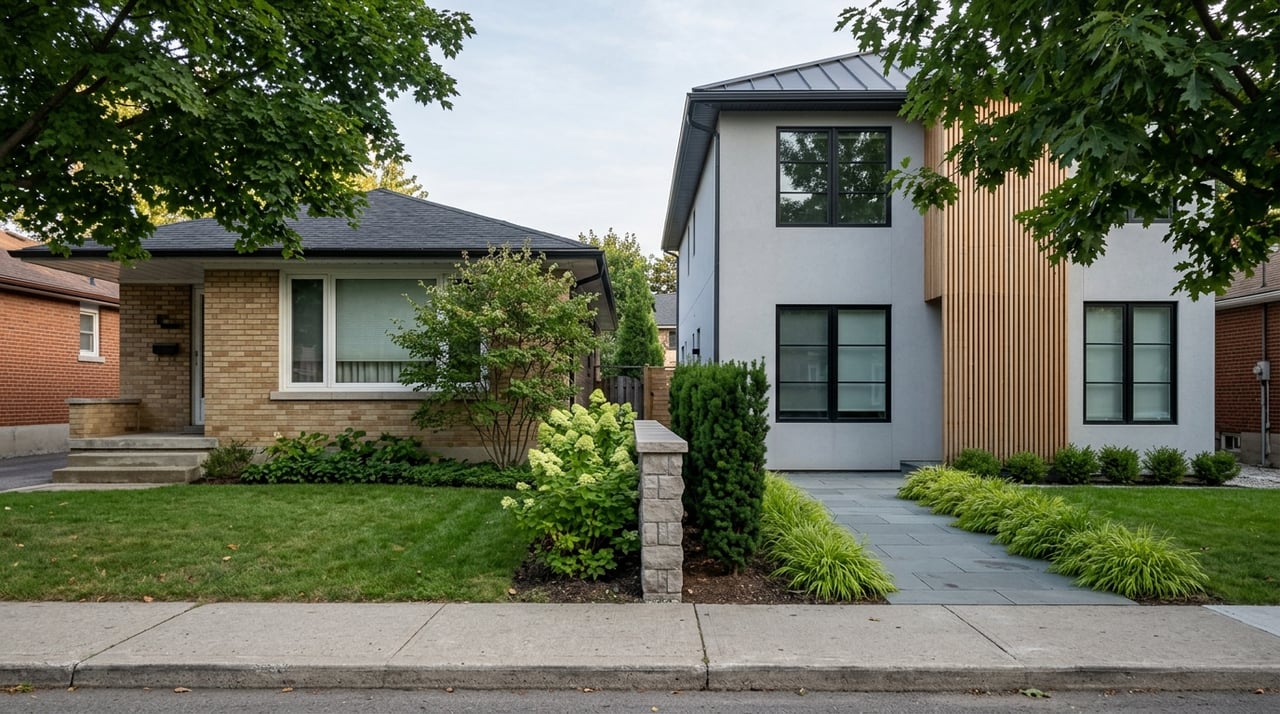
This approach aligns with how Oakville manages change in mature neighborhoods. The Town’s Design Guidelines for Stable Residential Communities apply to significant additions, replacement dwellings, and new detached homes, with a focus on compatibility and established neighborhood patterns.
In plain terms, the Town is not encouraging oversized or out-of-place projects in stable residential areas. If your plan is to improve what is already there in a way that fits the street, you may have a cleaner path than you would with a full teardown.
Renovation is usually strongest when:
For many sellers, this option can strike the right balance between value and risk. You improve presentation, marketability, and livability without stepping into the full complexity of a redevelopment project.
A rebuild conversation usually starts with the land. If your lot has attractive frontage or depth, and the existing home is not contributing much value, buyer interest may come more from builders or buyers planning a custom home.
Oakville’s redevelopment pipeline is active. The Town said construction started on 3,679 new homes in 2024, which was 134% of its housing target for the year. That does not mean every West Oakville property should be rebuilt, but it does confirm that new construction remains a meaningful part of the local housing picture.
Still, rebuilding in West Oakville is not simple. Zoning By-law 2014-014 sets the rules for land use, lot coverage, building location, height, and related standards. The Town’s design guidelines also make clear that replacement homes must remain compatible with surrounding homes and established patterns.
That means builder-minded buyers are not just evaluating your lot size. They are also thinking about the likely approval path, timeline, carrying costs, and whether the finished house can be built with confidence.
A rebuild path may be stronger when:
This kind of property can attract buyers, but they are often selective. They may factor in demolition timing, development charges, utility locates, servicing permits, conservation review, and the possibility of increased property tax assessment once the new work is complete.
Sometimes the smartest move is also the simplest one. Listing as-is can be the right strategy when the cost, time, and uncertainty of improvements outweigh the likely return.
That may be especially true if renovation quotes are high, permit timelines feel uncertain, or you want a cleaner sale without months of project management. In a balanced market, buyers still make room for homes that need work, as long as the pricing and positioning make sense.
An as-is sale does not mean a weak sale. It can still attract two different groups:
The goal is to be honest about what the market is buying. If your home is dated but usable, an end-user may still see opportunity. If the lot is the real prize, a builder may overlook the current condition of the house entirely.
In West Oakville, the renovate-versus-rebuild decision is shaped heavily by local approvals. Most renovation, construction, and demolition projects require a building permit or development engineering permit, and Oakville says work cannot begin before the required permit is issued.
For teardown projects, the Town states that a demolition permit can be applied for separately, but it can only be issued once the replacement building permit is also ready to be issued. That is an important detail because it affects timing, cost, and buyer confidence.
New-house applications can also trigger:
If your property has heritage status, that is another major checkpoint. Oakville requires a heritage permit for changes to designated heritage properties, while listed properties that are not designated do not require one.
Council also approved Official Plan Amendment 78 in April 2026, reinforcing neighborhood stability, local character, and growth directed to strategic growth areas. For West Oakville sellers, that signals continued sensitivity around compatibility and massing in mature residential areas.
Not every buyer sees your property the same way. A strong selling strategy starts by knowing which audience is most likely to compete for it.
End-user buyers tend to focus on day-to-day livability. They usually respond to layout, natural light, curb appeal, mature trees, and move-in convenience.
Oakville’s demographic profile supports this audience. With a high concentration of detached housing and strong household incomes, there is ongoing demand for homes that feel ready to enjoy now, not just homes that offer future redevelopment potential.
Builder buyers tend to screen properties differently. They are often looking at frontage, depth, servicing, title issues, heritage status, tree constraints, and whether the zoning path is clear enough to justify the project.
That is why some offers may come in lower than a seller expects. A builder is not just valuing the land. They are also pricing in risk, timeline, and approval costs.
If you are weighing your next move, a simple sequence can help you avoid expensive guesswork.
Start by understanding what the property can reasonably support under current rules. In West Oakville, that means looking closely at zoning, lot standards, and any design constraints tied to stable residential areas.
Before you assume a rebuild is viable, confirm whether heritage or conservation restrictions apply. These can change both the timeline and the value equation.
Do not blend these numbers together. A cosmetic update budget and a full redevelopment budget solve very different problems, and the market may reward them very differently.
Ask how the property would perform with end-user buyers versus builder buyers. The right marketing angle depends on who is most likely to pay a premium.
Renovating or rebuilding may increase value, but they also add time, cost, and execution risk. Listing as-is may produce a more efficient result if certainty matters more than squeezing out every possible dollar.
In West Oakville, there is no one-size-fits-all answer. A well-kept detached home on a typical lot may benefit most from targeted renovation and polished presentation. A dated house on a premium lot may be better positioned as a rebuild opportunity. And if the numbers are tight or approvals look uncertain, selling as-is may be the most strategic move.
The key is to avoid making this decision based on guesswork or general market chatter. In a neighborhood shaped by mature streetscapes, active redevelopment, and clear local rules, the best strategy starts with a property-specific read of value, approvals, and buyer demand.
If you are deciding how to position your West Oakville property, the team at Robertson Kadwell can help you evaluate the lot, the home, and the likely buyer pool so you can move forward with clarity.
Stay up to date on the latest trends in real estate.


Get assistance in determining current property value, crafting a competitive offer, writing and negotiating a contract, and much more. Contact us today.