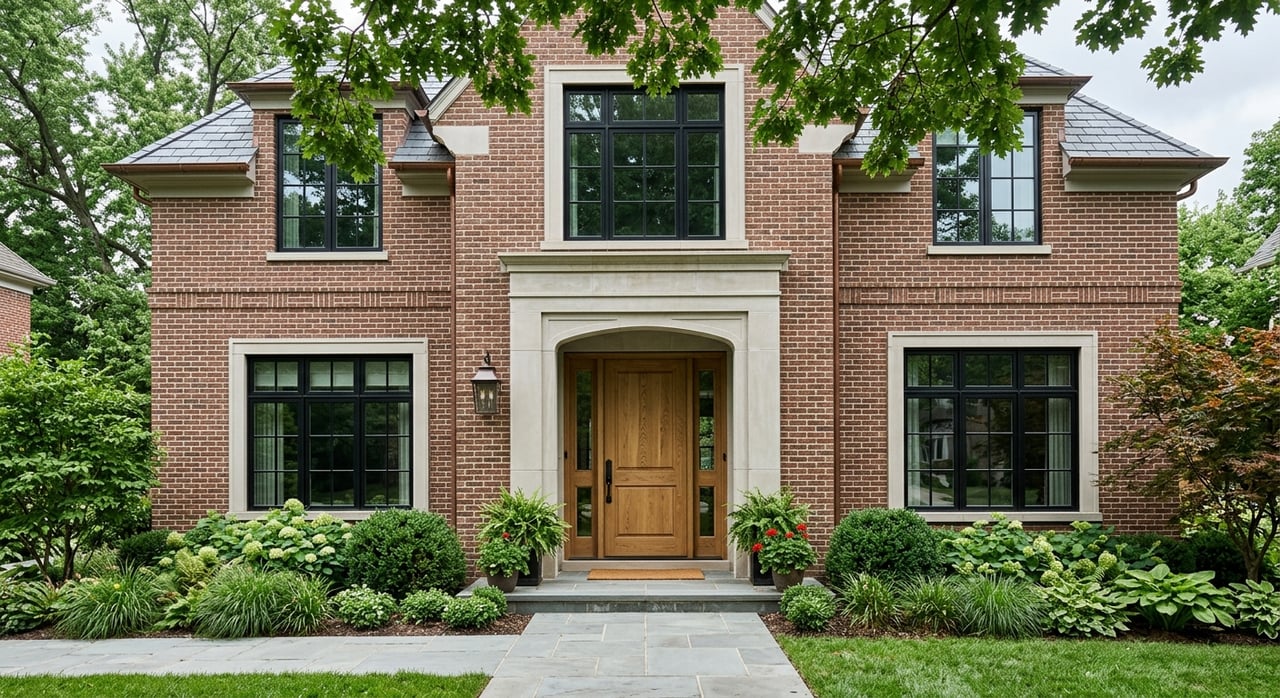
Ancaster Luxury Home Pricing Strategy: What Drives Value
Wondering why one Ancaster luxury home commands a premium while another, with a similar square footage, does not? In L9G, value is rarely about one headline feature alone. It comes from a careful read of the local market, the property itself, and the timing of your sale. If you want to understand how we assess value for Ancaster luxury homes, this guide will walk you through the framework we use and what it means for your next move. Let’s dive in.
Ancaster is not just another Hamilton price point. It is treated as its own community in local market reporting, and that matters when you are valuing a higher-end home.
Local planning and market data both point to the same reality: Ancaster has a distinct identity. Its heritage character, varied streetscapes, and strong design standards can create meaningful value differences from one pocket to the next. That is why broad Hamilton averages can miss the mark for a luxury property in L9G.
In local reporting, Ancaster is district 42. In December 2025, Ancaster’s average residential price was $1,002,915, while the median was $1,025,000. Year-to-date, the average residential price was $1,141,049, which helps show that pricing in this area can shift depending on the homes sold and the segment being measured.
In Ancaster, luxury is better understood as a local comparative segment than a single price threshold. A home may be considered luxury because of its lot, setting, customization, or overall market position, even if another home elsewhere in Hamilton carries a similar price.
For context, the benchmark detached Ancaster home was reported at $1,164,700 and modeled at 2,206 square feet on a 7,543 square foot lot with 3 bedrooms and 2 bathrooms. That benchmark is useful, but it is not a shortcut for pricing a custom or estate-style property.
Once a home sits above the typical detached profile, you need a more detailed lens. That is where a disciplined valuation process becomes essential.
The foundation of our process is the direct sales comparison approach. In simple terms, that means we study recently sold comparable properties and adjust for the differences between those homes and yours.
This mirrors the residential methodology used by MPAC. According to MPAC, about 85% of current value in most Ontario market areas can be tied to five major characteristics:
That framework gives you a strong starting point. It also reminds you that price is shaped by a mix of property and site factors, not just interior style or square footage.
Luxury buyers do not evaluate homes by square footage alone, and neither do we. In Ancaster, details that might seem secondary in other price bands can have a real effect on value.
We look closely at features such as:
MPAC also identifies site features, secondary structures, and structural features as relevant inputs. For a luxury home, those details are often central to buyer perception and final sale price.
A credible valuation starts with the tightest possible local comp set. For an Ancaster luxury home, that usually means starting in Ancaster first, then widening outward only if the number of truly relevant sales is too limited.
That does not mean we simply pull homes with a similar bed and bath count. We also try to match the elements that luxury buyers care about most and that the market tends to recognize.
When possible, we compare for:
This matters because location and design quality are major value drivers in a community like Ancaster. Two homes can appear similar online yet perform very differently once buyers weigh the lot, setting, and overall feel.
This is one of the biggest challenges in valuing upscale homes. In a thinner segment, there may be only a small number of recent sales that truly line up with your property.
When that happens, we do not force weak comparisons. Instead, we widen the search carefully and make clear, disciplined adjustments for the differences.
For example, we may adjust for:
MPAC notes that location adjustments may be developed within neighborhoods and borrowed from similar neighborhoods when sales are limited. That principle is especially useful in a market like Ancaster, where no two estate properties are exactly alike.
Not every recorded sale is a good comp. MPAC is clear that valid valuation should rely on open-market, arm’s-length sales with reasonable market exposure.
That is especially important in the luxury segment. Private transactions, family transfers, unusual financing, or other atypical deals can distort the picture if they are treated like standard market evidence.
In other words, a sale price alone is not enough. You also need to know how that sale happened and whether it reflects normal buyer behavior.
Property value is never assessed in a vacuum. Market pace can influence how buyers respond to a listing, how long they take to act, and how much room sellers have in pricing.
Recent Hamilton data points to a slower, more balanced environment than the peak-pandemic market. In March 2026, Hamilton single-family homes averaged 39 days on market, sold for 97.2% of list price, and had 3.5 months of supply.
April 2026 reporting for Hamilton showed 506 sales, an average price of $777,612, 1,300 new listings, 4.6 months of supply, and 36 days on market. Those numbers suggest buyers have more choice and more time than they did during faster market cycles.
Ancaster’s own December 2025 figures were even more revealing for premium sellers. Average days on market was 52.8, and months of supply was 10.06.
That does not mean every luxury home will sit. It does mean that pricing discipline matters. In a market with more supply and longer selling times, an aspirational list price can quickly create stale days on market.
This is a common point of confusion for homeowners. Your MPAC assessment may be useful for property tax purposes, but it is not a reliable shortcut for current market value.
MPAC states that Ontario’s 2026 property taxes continue to be based on fully phased-in January 1, 2016 current values because the reassessment cycle was postponed. That means the assessment framework used for taxes is not capturing today’s real-time market conditions in Ancaster.
If you are preparing to sell, relying on that number can lead you off course. A current pricing strategy needs recent sales, relevant local comps, and thoughtful property-specific adjustments.
A good valuation is not just a stack of numbers. It is a pricing story supported by local evidence.
We start with the best available Ancaster comparables, evaluate the property’s strengths and trade-offs, and then place those findings in the context of today’s market pace. From there, we build a launch price designed to attract the right buyers without leaving your home exposed to unnecessary market time.
For luxury sellers, that process matters because presentation and pricing work together. The goal is not simply to name a number. The goal is to position your home credibly and competitively in a market where buyers notice the details.
If you are considering a move in Ancaster, a thoughtful valuation can give you clarity before you make any major decisions. For a tailored, data-backed assessment of your home, connect with Robertson Kadwell.
Stay up to date on the latest trends in real estate.

Get assistance in determining current property value, crafting a competitive offer, writing and negotiating a contract, and much more. Contact us today.